
10 Common Pilates Mistakes Beginners Make (and How to Fix Them)
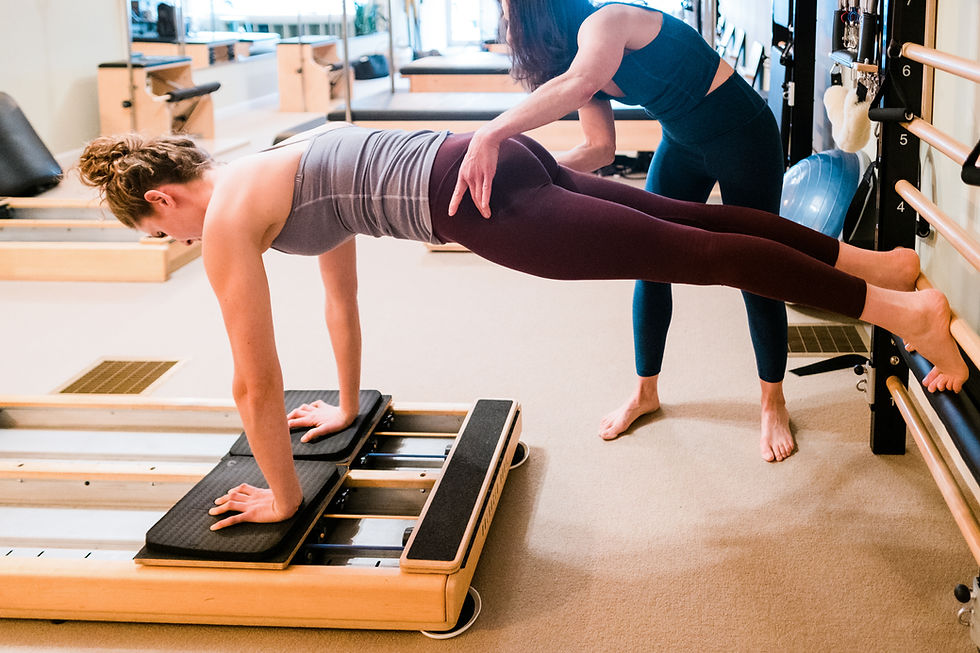
Starting Pilates can feel deceptively simple. The movements are slow. Controlled. Intentional. But that’s exactly why the little things matter. Small mistakes can completely change how an exercise feels and whether you’re actually getting the benefits Pilates is known for.
If you’ve ever walked out of class wondering why your neck hurts, your core isn’t firing, or you’re not seeing progress yet, you’re definitely not alone. Most beginners make the same handful of mistakes.
The good news? They’re all fixable. Here are 10 common mistakes beginners make in Pilates and how to avoid them.
1. Holding Your Breath
One of the first things beginners do in Pilates is forget to breathe. Usually, it happens during the harder movements when concentration kicks in and suddenly you’re halfway through an exercise without exhaling once.
The problem is that breathing is a huge part of Pilates. Your breath helps activate your core, stabilize your body, and create control through movement.
Instead of shallow chest breathing, practice lateral breathing. Inhale through your nose and expand your ribs outward. Exhale fully through your mouth while gently engaging your core. Once breathing becomes part of the movement, everything starts to feel smoother and more connected.
2. Using Momentum Instead of Control
Pilates is not about rushing through exercises. In fact, moving too quickly is one of the fastest ways to lose the entire purpose of the workout.
Swinging your legs, throwing yourself into a roll-up, or speeding through transitions usually means momentum is taking over instead of your muscles doing the work.
Slowing down often makes Pilates feel harder, not easier. That’s a good thing. Controlled movement builds strength, stability, and awareness in a way momentum never will.
If you can’t control the movement, modify it. There’s no shame in scaling back.
3. Overarching the Lower Back
Many beginners unintentionally arch their lower back during core exercises, especially when legs are lifted away from the body.
When this happens, your core disengages and your lower back takes over, which can lead to discomfort or strain. Focus on maintaining a neutral spine unless instructed otherwise. Think about gently drawing your ribs together and engaging your abdominal muscles before moving your legs or arms. Sometimes a smaller range of motion is exactly what your body needs.
4. Pulling on Your Neck
If your neck hurts more than your abs during Pilates, chances are you’re pulling your head forward during abdominal exercises.
This is incredibly common, especially during crunches or curls. Your hands should lightly support your head, not yank it forward. Keep your neck long and your shoulders relaxed. Imagine holding an apple between your chin and chest to avoid collapsing forward. A strong core should do the work, not your neck muscles.
5. Forgetting Core Engagement
Pilates is built around core strength, but many beginners misunderstand what “engaging your core” actually means.
It does not mean sucking in your stomach or bracing as hard as possible. Instead, think about allowing the breath to completely empty allowing the breath to feel like your hip bones are coming towards each other. The goal is support and stability, not tension. Once you learn how to activate your deep core muscles properly, every exercise becomes more effective.
6. Letting Form Slip for Harder Exercises
It’s tempting to jump into advanced movements right away. Social media makes teaser exercises look easy, but Pilates is built on foundations.
Trying harder variations before mastering the basics usually leads to poor form and frustration.
There’s a reason instructors spend so much time on alignment, breath, and control. Those basics are what make advanced exercises possible later on. Progression in Pilates is about quality, not speed.
7. Carrying Tension in the Shoulders
A lot of people unknowingly creep their shoulders up toward their ears during exercises, especially when using arm movements or props.This creates unnecessary tension and can make exercises feel uncomfortable instead of strengthening.
Check in with your shoulders regularly. Relax them down and away from your ears. Your neck should feel long, not compressed. Sometimes simply softening the shoulders changes the entire exercise.
8. Misaligning the Body
Pilates is incredibly alignment-focused. We start where your body lives. Once that is established we can allow your body to start to change itself through magical cues. We can’t force the body to change, we have to guide the body and the brain to make the changes. This will allow for better movement and prevent injury.
The challenge is that many people don’t realize they’re out of alignment until someone points it out. Using a mirror, recording yourself, or working with an instructor can help you notice small adjustments that make a huge difference. In Pilates, precision matters.
9. Skipping the Fundamentals
Some exercises may seem “too basic,” but foundational Pilates movements exist for a reason.
Exercises like the Hundred help build coordination, endurance, breath control, and core strength that support everything else you’ll do later.
Skipping the basics is like trying to build a house without a foundation. It may work temporarily, but eventually the cracks show. Mastering the fundamentals creates long-term strength and control.
10. Expecting Instant Results
Pilates works deeply. It strengthens stabilizing muscles, improves posture, increases mobility, and builds body awareness over time. But it’s not usually an overnight transformation. Many people quit too soon because they expect dramatic results immediately. The real magic of Pilates happens through consistency.
Aim for two to four sessions a week and pay attention to how you feel. Better posture, less tension, improved balance, and stronger movement patterns often show up before physical changes do.
Final Thoughts
Pilates is about mindful movement, not perfection. The smallest adjustments often create the biggest breakthroughs.
If you’re new to Pilates, give yourself permission to slow down and learn the foundations properly. Focus on control over intensity, consistency over perfection, and awareness over speed.
Over time, you’ll likely notice stronger muscles, better posture, improved balance, and a deeper connection to how your body moves every day.


Comments